
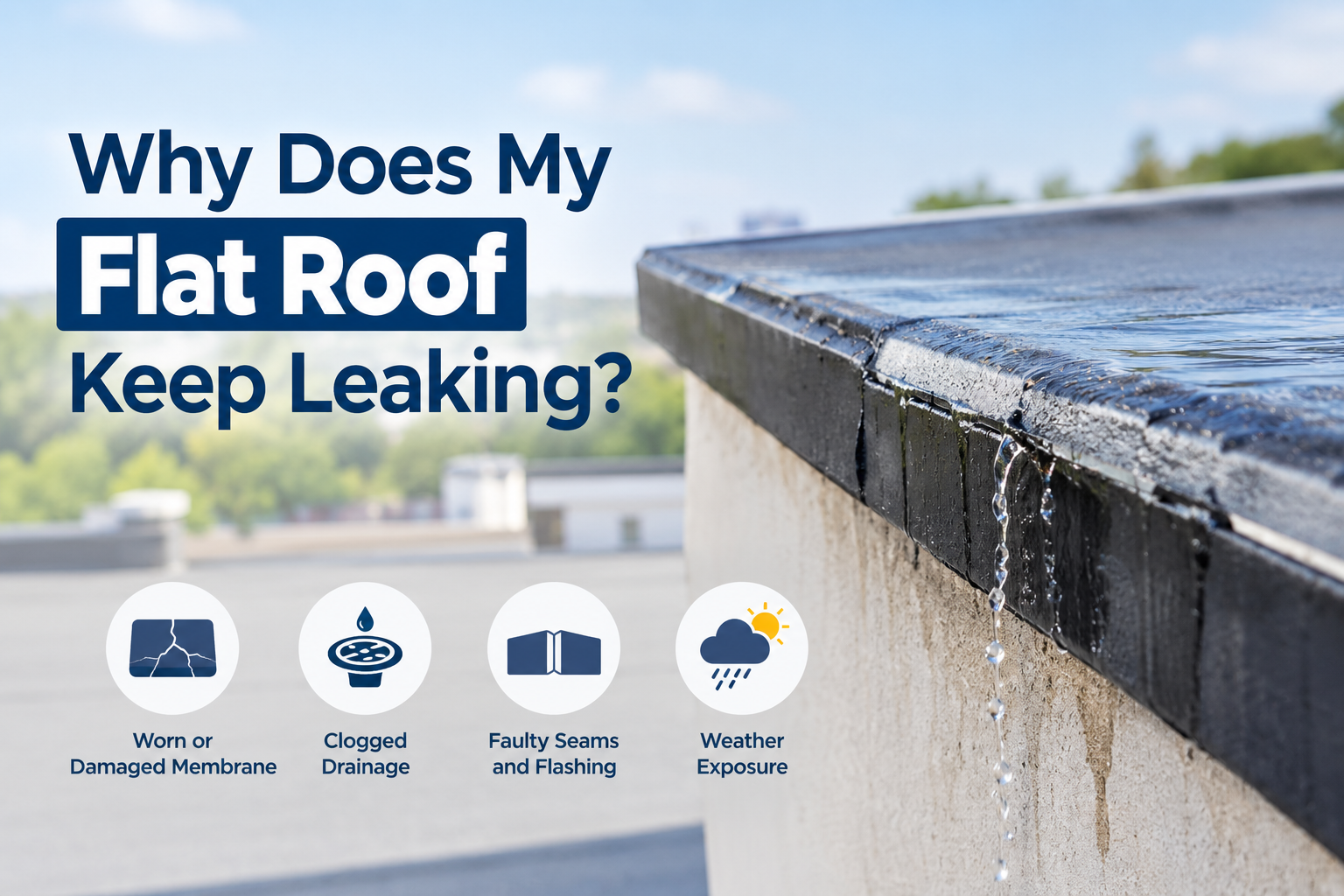
Key Takeaways
- Recurring flat roof leaks usually point to underlying issues like standing water, failed seams, aging membrane, damaged flashing, or clogged drains—not just a single bad patch.
- Water often travels beneath the membrane before appearing inside, so ceiling stains may show up far from the actual roof entry point.
- Weather stress (UV, freeze‑thaw, heavy rain, wind, snow load) accelerates deterioration and can turn small weaknesses into repeated leaks.
- Localized damage on an otherwise sound roof can often be repaired, but widespread seam failures, brittle membrane, or frequent leaks may mean replacement is more practical.
- Prevent repeat leaks by keeping drains clear, limiting foot traffic, inspecting after severe weather, and scheduling professional inspections to catch problems early.
A flat roof can provide a practical, modern roofing solution for homes and commercial buildings, but recurring leaks can quickly become frustrating. If you have repaired the same area more than once only to discover another leak later, the problem may be more complicated than a simple damaged spot.
Flat roofs are particularly vulnerable to certain drainage, membrane, flashing, and installation problems. Because they have little or no visible slope compared with traditional pitched roofs, water can remain on the surface for longer periods.
A recurring leak should never be treated as just a cosmetic issue. Water can travel beneath roofing materials before becoming visible inside the building, potentially damaging insulation, ceilings, walls, electrical components, and structural materials.
If your flat roof has started leaking repeatedly, consider having the entire affected area professionally inspected rather than repeatedly patching visible damage. An inspection can help identify the actual source before the problem becomes more extensive.
Common Reasons a Flat Roof Keeps Leaking
There are several reasons why a flat roof may continue to develop leaks. Identifying the underlying cause is essential because fixing only the location where water appears inside the building may not solve the problem.
1. Standing Water on the Roof
One of the most common problems with flat roofing is ponding water.
Although flat roofs are generally designed with a slight slope to direct water toward drains or other drainage points, poor drainage can allow water to remain on the surface. This may happen because of blocked drains, inadequate slope, damaged drainage systems, or changes in the roof structure.
When water sits on the roof for extended periods, it increases the amount of time roofing materials remain exposed to moisture. Over time, this can contribute to membrane deterioration, seams separating, and water finding its way through vulnerable areas.
If you regularly notice puddles that remain on your roof long after rainfall has stopped, the drainage system should be evaluated.
2. Failed Seams
Many flat roofing systems consist of sheets or sections that are joined together. These seams need to remain properly sealed to prevent water from getting underneath the roofing system.
Over time, seams can loosen, separate, or deteriorate. Once water gets underneath a membrane, it may travel horizontally before entering the building.
This is one reason the visible location of a ceiling stain does not always indicate the exact location of the roof problem.
A professional inspection can help trace moisture back toward its source instead of assuming the leak is directly above the visible damage.
3. Damaged or Aging Roofing Membrane
The membrane is one of the most important components of many flat roofing systems. It creates a protective barrier between the building and the outside environment.
As roofing materials age, they can become brittle, cracked, punctured, or otherwise weakened. Extreme temperatures, sunlight, storms, foot traffic, and repeated expansion and contraction can contribute to deterioration.
Small cracks or punctures may initially allow only a limited amount of moisture through. However, repeated exposure can gradually enlarge damaged areas.
If your roof is older and leaks are becoming more frequent, the membrane itself may be approaching the end of its useful life.
4. Damaged Flashing
Flashing is used around areas where the roof meets walls, vents, chimneys, equipment, and other structures. These transition points are particularly important because they can create opportunities for water to enter if they are not properly sealed.
Flashing can become loose, cracked, corroded, or damaged over time. Sealants around flashing can also deteriorate.
When a flat roof repeatedly leaks near a wall, vent, or other penetration, the flashing should be inspected carefully.
5. Clogged Roof Drains
Flat roofs rely heavily on effective drainage. If leaves, dirt, branches, debris, or other materials block a drain, rainwater may have nowhere to go.
A clogged drain can result in water accumulating on the roof. In severe situations, excessive water can put additional weight on the roofing structure while increasing the risk of leaks.
Regularly keeping drainage points clear is an important part of roof maintenance. However, drainage problems can sometimes indicate a larger design or structural issue that requires professional evaluation.
Concerned that damaged flashing, clogged drains, or recurring leaks may point to a bigger roofing problem? Learn when a full roof replacement may be a better solution than repeated partial repairs.
Can Weather Cause a Flat Roof to Leak?
Weather can play a major role in flat roof performance. Heavy rain, strong winds, snow, ice, and temperature fluctuations can all place stress on roofing materials.
Repeated expansion and contraction can cause materials and joints to move. Strong winds may lift or damage loose sections. Heavy precipitation can expose weak seams, drainage problems, and deteriorated areas.
Freeze-thaw cycles can be particularly challenging in climates where temperatures regularly move above and below freezing. Water can enter small cracks and expand when it freezes, potentially making existing damage worse.
When Should You Repair a Flat Roof?
Not every leaking flat roof needs to be completely replaced.
Repair may be appropriate when the roofing system is generally in good condition, and the problem is isolated. For example, a localized puncture, damaged flashing component, or limited seam failure may be repairable without replacing the entire roof.
The size and frequency of the leaks also matter. One isolated problem on an otherwise healthy roof is very different from repeated leaks across multiple areas.
A professional assessment can help determine whether repairing the existing system is practical.
How to Prevent Flat Roof Leaks
Although no roof can be guaranteed to remain problem-free indefinitely, preventive maintenance can reduce the likelihood of unexpected leaks.
Keep drainage systems clear and pay attention to areas where water regularly accumulates. After severe weather, look for visible signs of damage if the roof can be safely accessed.
It is also important to avoid unnecessary foot traffic. Walking on a flat roof can potentially damage certain roofing materials, particularly when people are not familiar with where it is safe to step.
Schedule professional inspections periodically, especially as the roof becomes older. Early detection can allow smaller problems to be addressed before they develop into major water intrusion.
What Should You Do When You Notice a Leak?
The first step is to take the leak seriously.
If water is entering the building, move furniture, electronics, and other vulnerable items away from the affected area. If water is near electrical fixtures or outlets, avoid contact with the area and seek appropriate professional assistance.
Try to note when the leak occurs. Does it happen only during heavy rain? Does it continue afterward? Does it appear during snow or ice melt? These details can help a professional identify potential causes.
Do not assume that a small ceiling stain means the problem is minor. Moisture can remain hidden for a considerable time before becoming visible.
Why Regular Roof Inspections Matter
Regular inspections can help homeowners identify problems before they become emergencies.
Small cracks, deteriorating sealants, loose flashing, blocked drains, and damaged membrane sections may be easier and less expensive to address when discovered early.
Inspections are particularly valuable after severe weather or when a roof is approaching the later stages of its expected service life.
A maintenance-focused approach also allows homeowners to plan for eventual replacement rather than being forced into an emergency decision after a major leak.
Want to stay ahead of potential roofing problems? Explore our latest roofing articles for helpful tips to protect your home and extend the life of your roof.
Final Thoughts: Stop Recurring Flat Roof Leaks at the Source
A flat roof that keeps leaking is usually telling you that something needs closer attention. The cause could be standing water, clogged drainage, damaged membranes, failed seams, deteriorated flashing, weather exposure, poor installation, or general aging.
The most important step is to determine the actual source of the problem. Repeatedly repairing the visible symptom without addressing the underlying cause can lead to continuing leaks and potentially greater property damage.
Frequently Asked Questions
1. Why does my flat roof keep leaking in the same place?
A recurring leak may indicate that the original problem was not fully addressed. Damaged membranes, failed seams, flashing issues, or water traveling beneath the roofing system can cause moisture to repeatedly appear in the same interior location.
2. Can a flat roof be repaired instead of replaced?
Yes. Many flat roofs can be repaired when the damage is localized and the rest of the roofing system remains in good condition. However, widespread deterioration, frequent leaks, or an aging roof may make replacement a more practical option.
3. Is standing water normal on a flat roof?
Some temporary moisture may occur after rainfall, but water that remains for extended periods can indicate a drainage problem. Persistent ponding should be investigated because prolonged moisture exposure can contribute to roofing deterioration.
4. How can I tell if my flat roof needs replacing?
Frequent leaks, widespread membrane damage, recurring repairs, extensive water damage, deteriorated flashing, and advanced age can all indicate that replacement should be considered. A professional inspection can provide a clearer assessment.
5. Should I repair a flat roof leak myself?
Minor maintenance such as keeping accessible drainage areas clear may be possible for some homeowners, but locating and repairing a roof leak can be difficult. Professional assessment is generally safer and more effective when water is entering the building.