
Key Takeaways
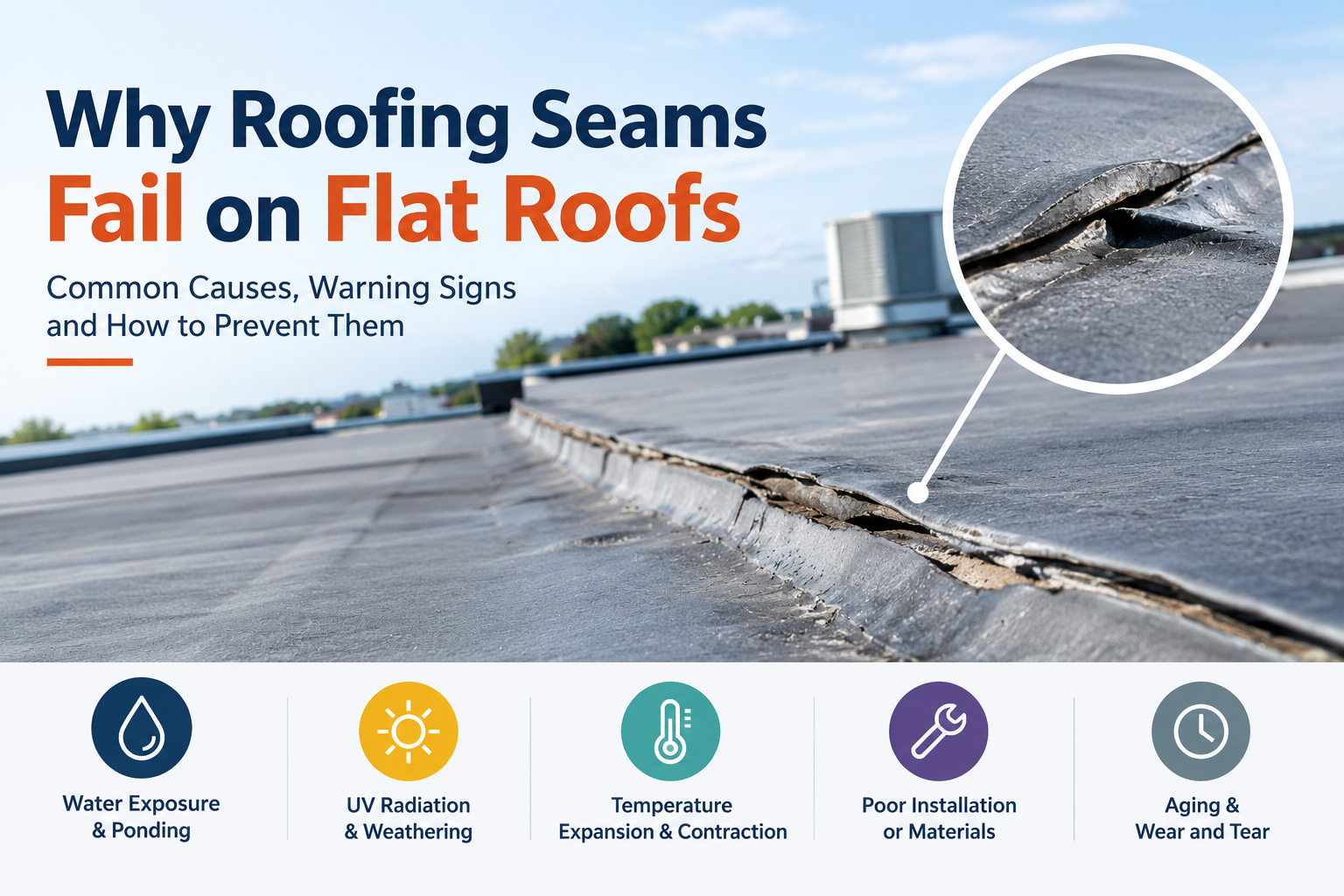
- Flat roof seams fail most often due to poor installation, aging materials, temperature-driven expansion and contraction, standing water, and physical damage from traffic or debris.
- Weather accelerates seam deterioration through UV exposure, freeze‑thaw cycles, heavy rain, wind stress, and snow load, especially when small weaknesses already exist.
- Seam leaks are hard to locate because water can travel along membranes, insulation, and decking, so interior stains may appear far from the actual roof entry point.
- Localized seam failures can often be repaired if the surrounding membrane is sound, but widespread seam issues or brittle, aged roofing usually signals that replacement is more practical.
- Preventing seam failure relies on regular inspections, keeping drains clear, limiting unnecessary foot traffic, fixing small problems early, and using qualified professionals for repairs and maintenance.
Flat roofs are designed to provide dependable protection while offering practical space for equipment, drainage systems, and modern building designs. However, like any roofing system, they can develop problems over time. One of the most common issues is seam failure.
Roofing seams are the areas where two sections of roofing material meet and are joined together. These connections need to remain properly sealed so that rain, melting snow, and moisture cannot get underneath the roofing membrane. When a seam weakens, separates, or becomes damaged, water can enter the roofing system and eventually make its way into the building.
Understanding why roofing seams fail can help property owners recognize problems earlier, maintain their flat roofs properly, and make informed decisions about repairs or replacement.
Seeing a separated seam or recurring leak? Have the surrounding roofing system inspected before choosing a repair. A proper assessment can reveal whether the problem is isolated or part of a larger roofing issue.
What Are Roofing Seams?
Roofing seams are the joints where separate sections of roofing material are connected. Depending on the type of flat roofing system, these seams may be bonded, welded, adhered, or mechanically fastened.
The seam is intended to create a continuous protective surface. When properly installed, it should prevent moisture from entering beneath the roofing membrane.
However, seams can become vulnerable because they are transition points within the roofing system. They may experience movement, temperature changes, moisture exposure, installation stress, and physical damage.
The condition of the seams is therefore an important part of evaluating the overall health of a flat roof.
Why Do Roofing Seams Fail?
There is rarely just one reason a roofing seam fails. Several factors can contribute to deterioration, and sometimes multiple problems occur at the same time.
1. Poor Installation
One of the most common causes of premature seam failure is improper installation.
A roofing membrane must be installed according to the requirements of the specific material and system. If seams are not properly bonded, welded, sealed, or fastened, they may begin separating much sooner than expected.
Poor installation can include inadequate preparation of the surfaces, insufficient bonding, incorrect overlap, improper welding temperatures, or failure to follow manufacturer specifications.
A roof may look perfectly finished immediately after installation while still containing weaknesses that eventually become visible through leaks.
2. Temperature Changes
Flat roofs are exposed to changing outdoor temperatures throughout the year. Roofing materials expand when heated and contract when temperatures fall.
Repeated expansion and contraction can place stress on seams and other connections. Over time, this movement can weaken adhesives, stretch materials, or contribute to separation.
In climates with significant seasonal temperature fluctuations, roofing materials may experience this stress repeatedly.
The better a roofing system is designed and installed to accommodate movement, the better it can withstand these ongoing changes.
3. Aging Roofing Materials
No roofing material lasts forever. As a flat roof ages, its membrane and seams may gradually lose flexibility and strength.
Adhesives can deteriorate, welded areas may weaken, and roofing materials can become more brittle after years of exposure to sunlight and weather.
An aging roof may initially develop small seam problems that can be repaired. However, if multiple seams begin failing throughout the roof, it may indicate that the roofing system is approaching the end of its useful life.
4. Standing Water
Flat roofs are generally designed with some slope to direct water toward drains or other drainage points. However, drainage problems can result in water remaining on the roof.
Persistent standing water can place prolonged moisture exposure on seams. Over time, water may find weaknesses in the connections and begin working underneath the membrane.
Ponding water can also indicate a larger drainage or structural issue. Simply repairing the seam without addressing why water remains in that area may not provide a lasting solution.
5. Physical Damage
Roofing membranes can be damaged by foot traffic, maintenance work, falling debris, severe weather, or equipment placed on the roof.
Even when the membrane itself appears intact, repeated foot traffic can place stress on seams and surrounding materials.
Anyone accessing a flat roof should understand where it is safe to walk and how to avoid damaging the roofing system.
6. Poor Drainage
A properly functioning drainage system is essential for many flat roofs.
Blocked drains, damaged drainage components, inadequate slope, and debris can prevent water from leaving the roof efficiently. This can increase moisture exposure and contribute to seam deterioration.
Regular inspections should therefore look at both the roofing membrane and drainage system.
How Weather Contributes to Seam Failure
Weather is one of the biggest external influences on flat roofing systems.
Heavy rain can expose weak seams, while strong winds can place stress on roofing materials. Snow and ice can add weight and introduce moisture into vulnerable areas.
Sunlight also affects roofing materials. Ultraviolet exposure can gradually degrade certain membranes, coatings, and sealants.
Freeze-thaw cycles can be particularly challenging. Water can enter small openings and freeze when temperatures drop. As water freezes and expands, existing weaknesses may become larger.
Weather does not necessarily create every seam problem, but it can accelerate deterioration that has already begun.
Why Seam Leaks Can Be Difficult to Find
A common misconception is that the location of an interior water stain is directly beneath the roof leak.
Water does not always travel vertically. Once moisture enters a flat roofing system, it may move along the membrane, insulation, decking, or other building components.
This means a technician may need to inspect a larger area than the location where water becomes visible.
Attempting to repair only the visible interior stain without finding the source will not solve the roofing problem.
Can Failed Roofing Seams Be Repaired?
In many cases, yes. The appropriate solution depends on the type of roofing system, the extent of the damage, the age of the roof, and the condition of surrounding materials.
A localized seam failure on an otherwise healthy roof may be repairable. The damaged area can potentially be cleaned, prepared, resealed, welded, or otherwise restored according to the roofing system’s requirements.
However, a repair should address the actual cause of failure. If the seam failed because of widespread material deterioration, poor drainage, or an aging membrane, fixing one location may only provide temporary relief.
Professional roof repair should therefore begin with identifying why the seam failed rather than immediately applying a patch.
When Is Seam Repair Not Enough?
Repair may not be the best long-term solution when the roofing system has widespread deterioration.
If numerous seams are failing, the membrane is brittle, or the roof has experienced repeated leaks over several years, replacing the system may be more practical.
The same applies when moisture has caused extensive damage beneath the membrane. The visible seam may only be one symptom of a larger problem.
A professional evaluation should consider the overall condition of the roof rather than focusing exclusively on one failed seam.
Not sure whether your roof needs a simple seam repair or a more comprehensive solution? Explore our latest roofing articles for more tips on repairs, maintenance, and replacement.
Final Thoughts on Flat Roof Seam Failure
Roofing seams play an essential role in keeping a flat roof watertight. When those connections fail, water can enter beneath the roofing system and potentially cause damage that extends far beyond the original problem.
The key is to identify the underlying cause. Repairing a failed seam can be effective when the surrounding roofing system remains in good condition. However, repeated seam failures may indicate a broader issue that requires more comprehensive work.
Frequently Asked Questions
1. What causes flat roof seams to fail?
Flat roof seams can fail because of poor installation, aging materials, temperature changes, standing water, physical damage, weather exposure, and drainage problems. In some cases, several factors contribute to failure at the same time.
2. Can a leaking roof seam be repaired?
Yes, a localized seam failure can often be repaired when the surrounding roofing system remains in good condition. The repair method depends on the type of roofing membrane and how the original seam was constructed.
3. How do I know if my flat roof needs replacement?
Frequent leaks, widespread seam separation, extensive membrane deterioration, recurring repairs, and significant moisture damage may indicate that replacement should be considered. A professional inspection can help determine the roof’s overall condition.
4. Does standing water cause roof seams to fail?
Persistent ponding water can contribute to seam deterioration by keeping roofing materials exposed to moisture for extended periods. Drainage problems should therefore be addressed along with any damaged seams.
5. How can I prevent roofing seams from failing?
Regular inspections, proper drainage maintenance, limiting unnecessary foot traffic, addressing damage early, and using appropriate professional maintenance can help reduce the risk of premature seam failure.