
Key Takeaways
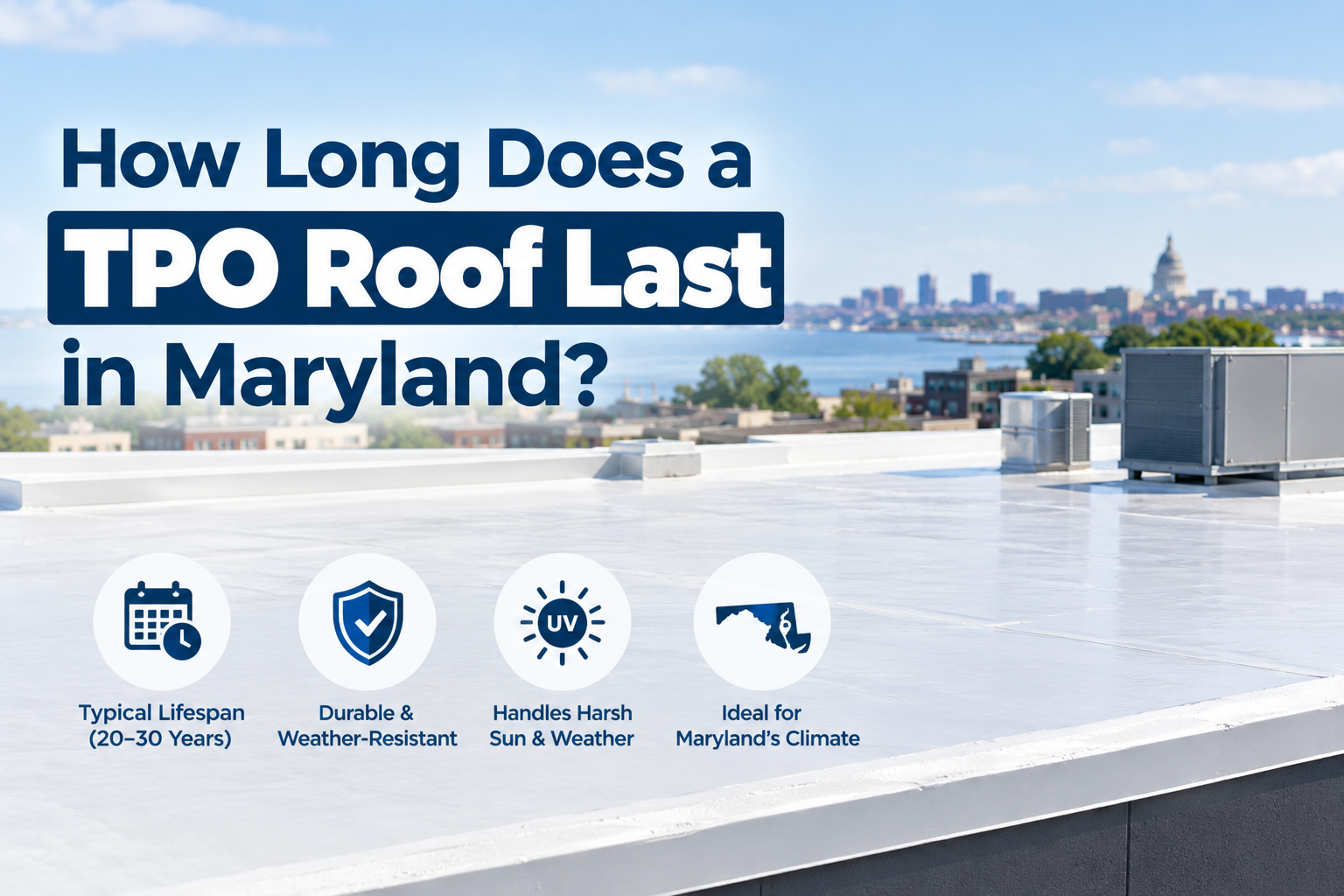
- A properly installed and maintained TPO roof in Maryland typically lasts about 15–25 years, though actual lifespan varies by membrane quality, installation, drainage, weather exposure, and maintenance.
- Maryland’s heat, UV exposure, humidity, rain, snow, and freeze-thaw cycles can place stress on membranes, seams, flashing, fasteners, and roof penetrations.
- Regular inspections, drain cleaning, seam and flashing checks, and quick leak repairs can help prevent small issues from becoming major roofing damage.
- Common warning signs include open or damaged seams, cracks, punctures, persistent ponding water, interior water stains, damp insulation, musty odours, and repeated repairs.
- Consider replacement when inspections show widespread membrane deterioration, recurring leaks, saturated insulation, or repair costs that no longer make long-term financial sense.
A TPO roof can be a durable and energy-efficient option for many buildings, but how long it lasts depends on the quality of the materials, installation, maintenance, and local weather conditions. In Maryland, roofs must withstand hot, humid summers, cold winters, heavy rain, occasional snow, and temperature fluctuations that can gradually affect roofing materials.
Thermoplastic polyolefin, commonly known as TPO, is a single-ply roofing membrane frequently used on flat and low-slope roofs. Its reflective surface, flexibility, and relatively straightforward installation make it a popular choice for many commercial properties and some residential buildings with suitable roof designs.
Understanding the expected lifespan of a TPO roof helps property owners plan maintenance, recognize potential problems, and determine when replacement may be more practical than continued repairs.
Concerned about your roof’s condition? Arrange a professional inspection to identify membrane damage, drainage problems, or deteriorating seams before minor issues develop into more extensive repairs.
What Is the Average Lifespan of a TPO Roof?
A properly installed and maintained TPO roof typically lasts around 15 to 25 years. Some roofing systems may perform beyond this range, while others may require significant repairs or replacement earlier because of poor installation, severe weather exposure, or inadequate maintenance.
The lifespan is not guaranteed. Different TPO products vary in thickness, formulation, reinforcement, and overall quality. The condition of the underlying roof deck and insulation can also influence how well the complete system performs over time.
What Determines Whether a TPO Roof Lasts 15 or 25 Years?
Several factors influence the lifespan of a TPO system.
The quality of the membrane is important, but installation is equally critical. Seams must be properly heat-welded, flashing must be correctly installed, and roof penetrations must be sealed appropriately. Even high-quality materials can fail prematurely if these details are handled incorrectly.
Drainage also matters. Standing water, blocked drains, and poorly designed roof slopes can contribute to long-term deterioration and increase the risk of leaks.
Finally, regular inspections help identify small problems before they develop into more expensive damage.
Learn More About Preventing Roofing Seam Failures: Read our guide to why roofing seams fail on flat roofs to understand common causes of seam failure and how proper roofing practices can help prevent premature leaks and costly repairs.
How Does Maryland’s Climate Affect a TPO Roof?
Maryland experiences several weather conditions that can influence the performance of a roofing membrane. Understanding these conditions can help property owners anticipate maintenance needs.
Summer Heat and UV Exposure
Maryland summers can bring high temperatures, humidity, and strong sunlight. Prolonged exposure to ultraviolet radiation and heat can gradually affect roofing materials.
TPO membranes are often white or light-colored, which allows them to reflect a portion of the sun’s radiation. This reflective surface can help reduce heat absorption compared with some darker roofing materials.
However, reflectivity does not make a membrane immune to aging. Over time, exposure to sunlight, thermal movement, and environmental conditions can affect its surface and seams.
Routine inspections can help identify cracking, shrinkage, loose flashing, or other signs that the roofing system needs attention.
Winter Freezing and Snow
Winter conditions can place additional stress on roofing systems. Freezing temperatures cause materials to contract, while warmer conditions can cause them to expand.
Repeated temperature changes may place stress on seams, flashing, fasteners, and areas around roof penetrations.
Snow and ice can also create problems when drainage is restricted. Although TPO membranes are designed for roofing applications, the complete system must be properly designed to manage expected weather conditions.
When Should Maryland Property Owners Consider a Roof Replacement?
Age alone should not determine whether a roof needs replacement. A 20-year-old system in good condition may perform differently from a younger roof that has experienced poor installation or extensive water intrusion.
Consider roof replacement when inspections reveal widespread membrane deterioration, recurring leaks, saturated insulation, or repair requirements that are becoming increasingly costly.
It is also worth reviewing the roof’s condition before purchasing a property or planning major building improvements. Understanding the remaining useful life can help you budget for future expenses.
What Are the Signs That a TPO Roof Is Wearing Out?
Recognizing early warning signs can help property owners address problems before they require extensive work.
1. Open or Damaged Seams
TPO membranes are commonly joined using heat-welded seams. These connections are essential to the waterproofing system.
If seams separate, weaken, or become damaged, water may enter the roofing assembly. Not every visible irregularity indicates failure, but suspected seam damage should be assessed by a qualified roofing professional.
2. Cracks, Punctures, or Surface Damage
Foot traffic, maintenance equipment, falling debris, and severe weather can damage the membrane.
Small punctures may allow moisture to enter the system, particularly if they occur near seams or roof penetrations. Repeated damage in several areas may indicate that the roof needs more extensive evaluation.
3. Persistent Ponding Water
Some low-slope roofs experience temporary water accumulation after rain. However, persistent ponding may indicate drainage problems or an inadequate roof slope.
Standing water can increase stress on vulnerable areas and may expose existing defects for longer periods. Drains, gutters, and drainage pathways should be checked regularly.
Explore Roofing Financing Options. Roof damage and drainage issues can worsen when repairs are delayed. If your TPO roof needs professional attention or a larger repair, explore the financing options available to learn more about available ways to plan for your roofing investment.
4. Interior Water Stains
Water stains on ceilings, damp insulation, peeling paint, or musty odors may indicate a roofing leak.
The location of an interior stain does not always identify the exact point where water entered. Moisture can travel along the roof deck or structural components before becoming visible inside the building.
A professional assessment can help locate the source and determine whether the issue is isolated or part of a larger roofing problem.
5. Repeated Repairs
One repair does not necessarily mean a roof is nearing the end of its life. However, repeated leaks, recurring seam problems, or widespread membrane deterioration may suggest that the system is aging.
If repair costs continue to increase, comparing the cost of further work with the cost of replacement can help determine the most practical long-term solution.
How Does Installation Quality Affect Roof Longevity?
Even a high-quality TPO membrane may fail prematurely if it is installed incorrectly.
Proper installation requires attention to substrate preparation, insulation, fastening or adhesion methods, seam welding, flashing, and roof penetrations. The contractor must also account for the building’s drainage requirements and environmental exposure.
Choosing an experienced roofing service provider can help reduce the likelihood of installation-related problems.
Property owners should ask prospective contractors about their experience with TPO systems, the products they recommend, and how they inspect completed work. It is also useful to understand the difference between a manufacturer’s material warranty and any workmanship warranty provided by the installer.
Is TPO Roofing Suitable for Maryland Homes?
TPO can be a suitable choice for homes with flat or low-slope roof sections, provided the system is designed for the building and installed correctly.
It may be considered for modern architectural designs, home additions, garages, and other areas where a single-ply membrane is appropriate.
However, homeowners should compare TPO with other materials based on roof slope, energy performance, appearance, durability, maintenance requirements, and budget.
How Much Maintenance Does a TPO Roof Need?
TPO roofs generally require less routine attention than some roofing systems, but they are not maintenance-free.
A practical maintenance plan should include periodic visual checks, professional inspections, drain cleaning, assessment of flashing and seams, and prompt investigation of leaks.
The exact schedule depends on the property’s location, surrounding trees, roof use, weather exposure, and age of the membrane.
Commercial buildings may require more frequent attention because of HVAC equipment, rooftop access, and ongoing maintenance activity. Some residential applications may have fewer penetrations and less foot traffic, but their condition should still be monitored.
Keep Your TPO Roof in Good Condition. Learn more about professional roof repair and maintenance services from Roofing & Windows to help protect your roof and maintain its long-term performance.
Final Thoughts: How Long Will Your TPO Roof Last?
A TPO roof in Maryland can typically last around 15 to 25 years when it is properly installed, maintained, and suited to the building. However, its actual lifespan depends on membrane quality, drainage, installation workmanship, weather exposure, and how quickly problems are addressed.
Maryland’s hot summers, freezing winters, rainfall, and temperature fluctuations make regular inspections especially valuable. Monitoring seams, flashing, punctures, and drainage can help property owners identify concerns before they lead to extensive damage.
Frequently Asked Questions
1. How long does a TPO roof last in Maryland?
A properly installed and maintained TPO roof typically lasts around 15 to 25 years. Its actual lifespan depends on membrane quality, installation workmanship, drainage, maintenance, roof use, and exposure to Maryland’s weather conditions.
2. What is TPO roofing?
TPO, or thermoplastic polyolefin, is a single-ply roofing membrane commonly used on flat and low-slope roofs. It is often selected for its reflective surface, flexibility, and relatively straightforward installation.
3. Is TPO roofing suitable for Maryland homes?
TPO can suit Maryland homes with flat or low-slope roof sections. It may work well for modern homes, additions, garages, and other structures where a single-ply membrane is appropriate. A roofing professional should assess the roof design, slope, drainage, and building requirements before installation.
4. How does Maryland weather affect a TPO roof?
Maryland’s hot, humid summers, strong sunlight, heavy rain, freezing temperatures, snow, and repeated temperature changes can affect TPO roofing over time. Thermal movement may place stress on seams, flashing, fasteners, and roof penetrations, while poor drainage can increase the risk of deterioration.
5. Does a white TPO roof last longer?
Many TPO membranes are white or light-colored and can reflect some sunlight, which may reduce heat absorption. However, reflectivity does not prevent normal aging or guarantee a longer lifespan. Installation quality, membrane thickness, drainage, maintenance, and weather exposure remain important factors.
6. How does installation quality affect TPO roof longevity?
Poor installation can cause premature seam failure, leaks, membrane damage, and problems around flashing or penetrations. Proper installation requires suitable substrate preparation, insulation, fastening or adhesion, heat-welded seams, and correctly designed drainage. Choosing an experienced roofing contractor can help reduce installation-related problems.
7. What are the signs that a TPO roof is failing?
Warning signs include open or damaged seams, cracks, punctures, loose flashing, persistent ponding water, recurring leaks, interior water stains, damp insulation, peeling paint, musty odours, and frequent repair needs. A professional inspection can determine whether the issue is isolated or indicates broader deterioration.
8. Are damaged TPO seams serious?
They can be. TPO seams are important parts of the waterproofing system, and separation or damage may allow water to enter the roofing assembly. Not every visible irregularity indicates a major failure, but suspected seam damage should be assessed and repaired by a qualified roofing professional.
9. Is ponding water a problem on a TPO roof?
Persistent ponding water may indicate blocked drains, poor drainage, or inadequate roof slope. Temporary water accumulation after rain is not always a serious problem, but water that remains for extended periods can increase stress on seams, flashing, and membrane defects.
10. Can small punctures in TPO roofing cause leaks?
Yes. Punctures caused by foot traffic, tools, maintenance equipment, falling debris, or severe weather may allow moisture to enter the roofing system. Damage near seams or penetrations deserves prompt attention because it may worsen or allow water to spread beneath the membrane.
11. What do interior water stains mean?
Ceiling stains, damp insulation, peeling paint, or musty odours may indicate a roof leak. The visible stain may not be directly below the entry point because water can travel along the roof deck or structural components. Professional assessment may be needed to locate the source accurately.
12. How often should a TPO roof be inspected?
A TPO roof should receive periodic visual checks and professional inspections, particularly after severe weather, before major maintenance work, and as the roof ages. The appropriate schedule depends on the roof’s age, surrounding trees, rooftop equipment, foot traffic, weather exposure, and drainage conditions.
13. Does a TPO roof require regular maintenance?
Yes. TPO roofing is not maintenance-free. Maintenance may include cleaning drains, checking seams and flashing, inspecting penetrations, removing damaging debris, monitoring ponding water, and investigating leaks promptly. Commercial roofs may require additional attention because of HVAC equipment and frequent rooftop access.