
Key Takeaways
- Ponding water is standing water that remains on a flat or low-slope roof for roughly 48 hours after rainfall or snowmelt, often indicating a drainage or low-spot issue.
- Persistent water increases leak risk by placing prolonged moisture exposure on seams, flashing, roof penetrations, and other vulnerable membrane details.
- It can accelerate membrane wear, damage insulation or roof decking after moisture intrusion, add significant structural weight, and eventually contribute to interior staining, mould, and finish damage.
- Common causes include blocked drains or scuppers, debris-clogged gutters, inadequate slope, compressed insulation, roof deflection, structural movement, and aging materials.
- Arrange a professional roof inspection if ponding recurs, grows, lasts beyond two days, appears near penetrations or drains, coincides with leaks, or occurs with visible sagging.
Flat roofs are common on commercial buildings, garages, home additions, and modern properties. Although they are designed to protect buildings from the elements, their relatively low slope can make effective drainage especially important. When rainwater remains on the surface long after the surrounding roof has dried, the condition is known as ponding water.
A small amount of water immediately after rainfall does not necessarily indicate a roofing problem. However, water that remains for an extended period can signal drainage issues, surface depressions, or structural concerns that deserve attention. Over time, persistent ponding may contribute to leaks, membrane deterioration, insulation damage, and costly repairs.
Understanding what ponding water does to a flat roof can help property owners recognize warning signs, identify possible causes, and determine when professional intervention is necessary.
Noticing water that remains on your roof after rainfall? Arrange a professional inspection to check drainage, membrane condition, and possible underlying damage before the problem becomes more expensive to resolve.
What Is Ponding Water on a Flat Roof?
Ponding water refers to water that remains on a roof for an extended period after rainfall or snowmelt instead of draining away as intended. Flat roofs are not always completely level. Most properly designed systems incorporate a slight slope, tapered insulation, drains, or other drainage features to move water toward designated outlets.
When these features do not work effectively, water can collect in low spots and form visible pools.
Some temporary water accumulation may occur after heavy rainfall, especially during periods of intense precipitation. The concern arises when water remains for longer than the roofing system is designed to accommodate.
As a general guideline, water that persists for more than about 48 hours after rainfall has stopped is commonly considered ponding, although the specific roof design and applicable standards should be considered.
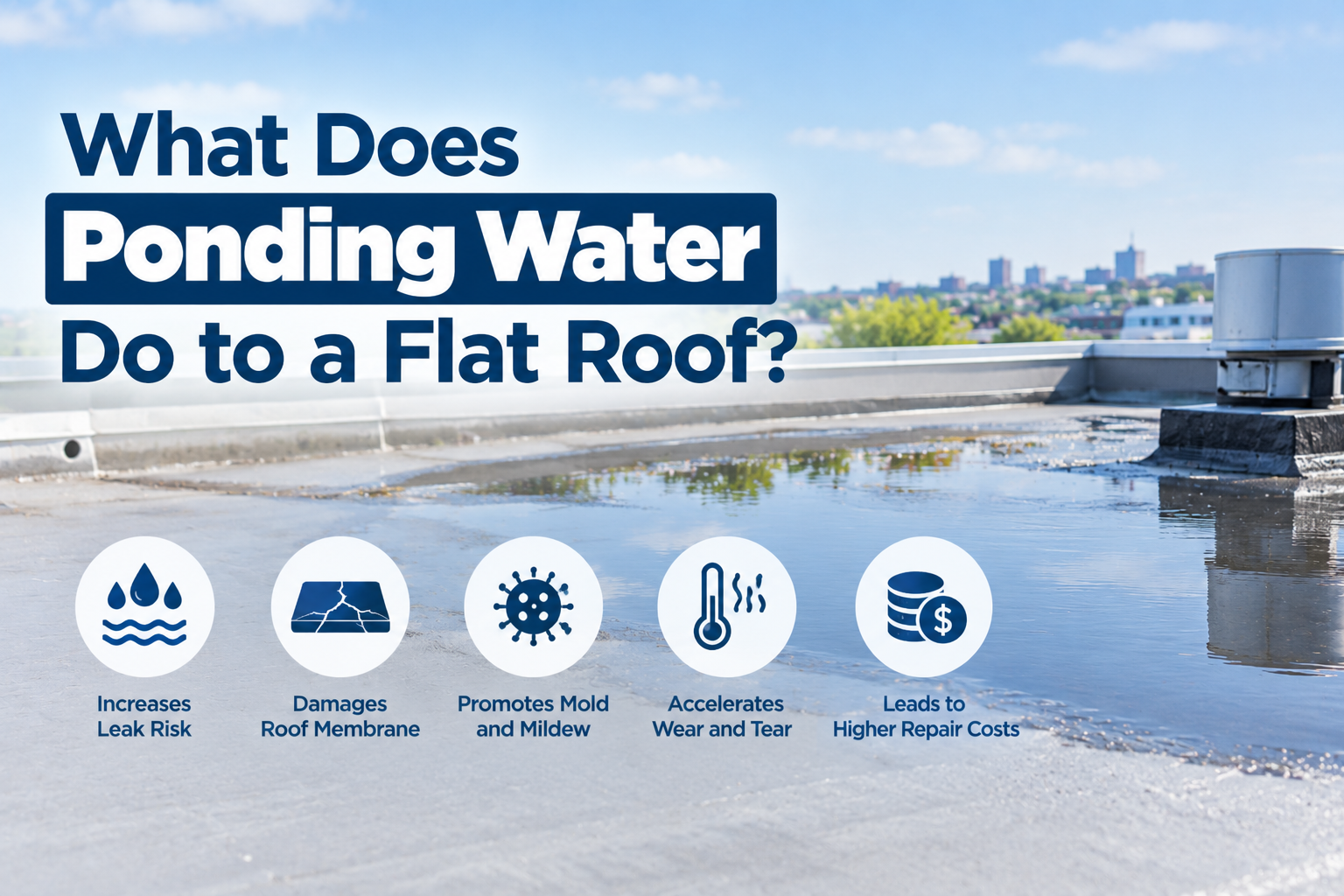
What Damage Can Ponding Water Cause?
Ponding water occurs when rainwater remains on a flat or low-slope roof instead of draining away properly. While TPO roofing membranes are designed to resist water, prolonged ponding can expose existing weaknesses and contribute to roofing problems over time. Understanding the potential damage can help property owners identify issues early and avoid costly repairs.
1. It Increases the Risk of Roof Leaks
One of the most immediate concerns associated with ponding water is the increased opportunity for moisture to enter through vulnerable areas.
Flat roofing systems rely on continuous waterproof membranes, properly sealed seams, flashing, and watertight details around penetrations. If any of these areas are damaged or deteriorated, prolonged contact with standing water can increase the likelihood of leakage.
2. It Can Deteriorate Roofing Materials
Roofing membranes are designed to withstand exposure to outdoor conditions, but their durability depends on the material, installation quality, and intended application.
Persistent ponding can expose existing defects and place additional demands on vulnerable areas. Depending on the roofing system, prolonged water accumulation may contribute to deterioration around seams, flashing, coatings, or repairs that were not designed for continuous immersion.
3. It Adds Weight to the Roof Structure
Water is heavy. A layer of water approximately one inch deep weighs around 5.2 pounds per square foot.
That additional weight can become significant when water collects across a large roof area. For example, a broad, deep pool can place considerable additional load on the roof structure.
If the roof was not designed for that loading condition, or if structural components have deteriorated, the added weight may create safety concerns.
4. It Can Damage Insulation and Roof Decking
Many flat roofing systems contain insulation beneath the waterproof membrane. When water enters through a defect, the insulation may absorb moisture or lose some of its intended thermal performance, depending on the material.
Wet insulation can increase heat transfer and may contribute to higher energy costs. Moisture can also affect the roof deck, particularly if the deck is made from materials vulnerable to prolonged dampness.
Depending on the construction, trapped moisture may lead to corrosion, deterioration, or other damage that is not immediately visible from the roof surface.
Learn Why Your Flat Roof Keeps Leaking. Read our guide on why your flat roof keeps leaking to understand common causes of flat roof leaks and how timely repairs can help protect your roofing system.
5. It Can Contribute to Mold and Interior Damage
When water enters a building, it can affect ceilings, walls, finishes, stored belongings, and other interior materials.
If moisture remains trapped in concealed spaces, conditions may become suitable for mold growth. This is especially concerning when leaks go unnoticed for an extended period.
Water stains, peeling paint, musty odors, and damp ceiling materials can all indicate moisture intrusion. These symptoms should be investigated rather than simply covered with paint.
Why Does Water Collect on Flat Roofs?
Ponding water can develop for several reasons. Identifying the underlying cause is essential because removing the visible water without correcting the problem may only provide temporary relief.
Poor or Inadequate Drainage
Blocked drains, clogged scuppers, obstructed gutters, and poorly maintained drainage pathways can prevent water from leaving the roof efficiently.
Leaves, branches, dirt, roofing debris, and other materials may restrict water flow. Regularly inspecting drains and removing debris can help maintain proper drainage.
Improper Roof Slope
Although called flat roofs, most systems require some slope to direct water toward drains or roof edges.
If the slope is inadequate, water may collect in low areas instead of flowing away. This may result from the original design, installation issues, or changes that occurred during later roofing work.
Correcting the problem may require tapered insulation, drainage improvements, or other measures appropriate to the roof assembly.
An improperly sloped roof can lead to persistent ponding water, increasing the risk of leaks and long-term roofing damage. Explore roof replacement and installation services to learn how professional roofing solutions can help improve drainage, protect your property, and support long-term roof performance.
Roof Deflection or Structural Movement
Over time, some roofs may develop depressions because of structural movement, excessive loading, or deterioration of supporting materials.
When the roof surface dips, water can accumulate in the affected area. If the added water increases the load and contributes to further deflection, the problem may worsen.
A professional should evaluate suspected structural concerns before any repair strategy is selected.
Aging Roofing Materials
As roofing systems age, they may develop wrinkles, cracks, seam problems, or other irregularities. Previous repairs may also create uneven areas if they were not properly integrated with the existing system.
Aging does not always cause ponding directly, but it can make a roof more vulnerable to the effects of persistent water accumulation.
When Should You Call a Roofing Professional?
Some ponding problems can be traced to visible debris, but others require a more detailed evaluation.
Consider arranging an inspection if water remains on the roof for extended periods, leaks develop after rainfall, interior stains appear, or the membrane shows signs of damage.
Professional advice is particularly important when the roof is visibly sagging or the water accumulation is unusually deep. These conditions may indicate structural concerns that should not be handled as routine maintenance.
For commercial properties, a dependable commercial roofing maintenance plan can help property managers monitor large roof areas, coordinate inspections, and plan repairs before problems affect building operations.
Can Ponding Water Be Covered by a Roof Warranty?
Warranty coverage depends on the manufacturer’s terms, the roofing system, installation requirements, maintenance history, and the cause of the damage.
Some systems are designed to tolerate ponding under specified conditions, while others have limitations related to standing water. Improper installation, neglected maintenance, unauthorized modifications, or excluded causes of damage may affect coverage.
Before authorizing major work, review the available warranty documents and ask the contractor whether the proposed repair could affect existing coverage.
Keep inspection records, repair invoices, and maintenance documentation where possible. These records can help establish the roof’s history and support future maintenance decisions.
How Does Ponding Water Affect Long-Term Roof Costs?
The financial impact depends on how quickly the problem is identified and what damage has already occurred.
A minor drainage obstruction may be relatively straightforward to correct. In contrast, a persistent leak that damages insulation, decking, ceilings, and interior finishes can require multiple trades and a much larger repair budget.
Early intervention may help limit the affected area and reduce the likelihood of secondary damage. It can also help property owners make informed decisions about whether continued maintenance or replacement offers better long-term value. Absolute Home Solutions can be contacted to discuss property improvement needs and explore appropriate next steps for maintaining the building exterior.
Choosing the Right Professional for Flat Roof Problems
Selecting a qualified contractor is an important part of protecting a flat roof. Look for experience with the specific membrane installed on your property and ask how the contractor will investigate the source of ponding.
A professional assessment should consider both the visible surface and, where necessary, the underlying roof assembly. The contractor should explain whether the issue involves drainage, membrane damage, insulation, or structural concerns.
Know When Your Roof Needs Professional Attention. Read our guide to the signs your home needs a roof replacement to learn how to recognize common warning signs and determine when professional roofing services may be necessary.
Final Thoughts: Don’t Ignore Ponding Water on a Flat Roof
Ponding water can contribute to roof leaks, membrane deterioration, insulation damage, structural loading, and costly interior problems. Although some temporary water accumulation may be normal after rainfall, persistent pooling should be investigated to determine whether drainage or roofing defects are present.
Regular inspections, clear drainage pathways, prompt repairs, and suitable roof design can all help reduce the risks associated with standing water.
If the roof is already leaking or showing signs of deterioration, addressing the underlying cause is more effective than simply removing the water or covering visible damage.
Frequently Asked Questions
1. What is ponding water on a flat roof?
Ponding water is water that remains on a flat or low-slope roof for an extended period after rainfall or snowmelt instead of draining away. Temporary water accumulation after heavy rain may be normal, but water that persists can indicate blocked drainage, low areas, inadequate slope, or structural movement.
2. How long can water remain on a flat roof before it becomes a concern?
As a general guideline, water that remains for more than approximately 48 hours after rainfall has stopped is commonly considered ponding. The appropriate timeframe depends on the roof design, drainage system, roofing material, and applicable standards. Persistent water should be professionally evaluated.
3. Is ponding water dangerous for a flat roof?
It can be. Long-term ponding may increase the risk of leaks, membrane deterioration, insulation damage, structural loading, mould, and interior water damage. The risk is greater when the roof already has damaged seams, punctures, cracks, deteriorated flashing, or blocked drains.
4. Can ponding water cause a flat roof to leak?
Yes. Standing water can remain around damaged seams, flashing, roof penetrations, and membrane defects for extended periods. If these areas are not watertight, prolonged moisture exposure may allow water to enter the roofing assembly and building interior.
5. How much does ponding water weigh?
Water approximately one inch deep weighs about 5.2 pounds per square foot. Across a large roof area, even a relatively shallow pool can add significant weight. Deep or widespread ponding may create structural concerns, particularly if the roof has deteriorated or was not designed for that loading condition.
6. Can ponding water damage roof insulation?
Yes. If water enters through a roofing defect, it may reach the insulation beneath the membrane. Wet insulation can lose thermal performance, increase heat transfer, and contribute to higher energy costs. Trapped moisture may also remain hidden and affect the roof deck or supporting materials.
7. Can standing water cause mould inside a building?
Yes. If ponding water leads to a leak, moisture may affect ceilings, walls, finishes, stored materials, and concealed spaces. Persistent dampness can create conditions suitable for mould growth. Water stains, peeling paint, musty odours, and damp materials should be investigated rather than simply covered.
8. Can roof deflection cause ponding water?
Yes. Structural movement, excessive loading, deterioration, or weakened supporting materials can create depressions in the roof surface. Water may collect in these low areas, and the added weight can potentially worsen deflection. Suspected sagging or structural movement requires professional assessment.
9. How can I prevent ponding water on my flat roof?
Keep drains, gutters, scuppers, and drainage paths clear of debris. Arrange regular roof inspections, address membrane and flashing damage promptly, monitor low areas after rainfall, and ensure repairs do not create uneven surfaces. Persistent drainage problems may require tapered insulation, drainage improvements, or roof replacement.
10. When should I call a roofing professional?
Arrange an inspection if water remains on the roof for an extended period, leaks appear, interior stains develop, or the membrane shows cracks, punctures, open seams, or deteriorated flashing. Professional assistance is especially important if the roof is sagging or the water accumulation is unusually deep.
11. Can ponding water be repaired without replacing the roof?
Sometimes. If the cause is a blocked drain or isolated membrane damage, cleaning or localized repair may be sufficient. Persistent ponding caused by inadequate slope, structural movement, widespread deterioration, saturated insulation, or recurring leaks may require more extensive work or roof replacement.
12. Is ponding water covered by a roof warranty?
Warranty coverage depends on the manufacturer’s terms, roofing system, installation requirements, maintenance history, and cause of the damage. Some systems may tolerate ponding under specific conditions, while others exclude damage related to standing water. Review warranty documents and consult the manufacturer or contractor before authorizing major work.
13. How does ponding water affect long-term roofing costs?
A minor drainage obstruction may be relatively inexpensive to correct, while an unresolved leak can damage insulation, decking, ceilings, walls, and interior finishes. Early inspection and repair may reduce secondary damage and help determine whether continued maintenance or roof replacement provides better long-term value.
14. How should I choose a contractor for a ponding-water problem?
Choose a contractor with experience in the specific roofing membrane and flat-roof system installed on your property. Ask how they will investigate drainage, membrane condition, insulation, and potential structural concerns. The contractor should explain the underlying cause and recommend a solution rather than only removing visible water.